The Life & Death of the El Rancho Vegas 1941-1960

1955 view of the Strip's first casino, the 1941 El Rancho, showing the marquee for the 1951 Opera House (which replaced the earlier Round-Up Room). The El Rancho burned down in 1960 after a 19 year existence.

The 1941 El Rancho's windmill was the first neon casino sign on the Las Vegas Strip.

The 1941 construction of the Strip's first casino-hotel. The El Rancho Vegas.

The El Rancho was located at what is now the westside of the Strip near the Sahara intersection (known then as Highway 91 and San Francisco Street).

Looking north towards Downtown at the Los Angeles Highway and the El Rancho Vegas. The El Rancho was part of a 1940s, four hotel chain built (by California hotelman Thomas Hull) just outside of the 1941 LV city limits.

Looking west towards the El Rancho. As the first casino-hotel on the LV Strip, the El Rancho acted as a template and set a standard which all future Las Vegas casinos would try to surpass. This was the first Strip casino to offer hotel rooms, air-conditioning, auto service, gaming, a chuck-wagon buffet, a 24 hour coffee shop, pool and showroom entertainment. The concept of a completely self-contained resort was first set in place at the El Rancho Vegas, which incorporated amenities and features, used earlier in Las Vegas, at the Dude Ranches (such as the Boulderado, Twin Lakes and Bar-W Ranch) which provided 6 week housing to out-of-state divorcees taking advantage of Nevada's lenient 1931 Divorce Laws.

Lounging on the lawns of the El Rancho 1942.

The 1960 fire and destruction of the El Rancho.

The El Rancho Vegas was the fourth built hotel in Tom Hull's chain (the El Rancho Sacramento, Fresno & Bakersfield). Photo-historian, Erik Wunstell, is seen in 1974 pondering the history and demise of the El Rancho Fresno. The Fresno motel was a template for the later Las Vegas El Rancho (though without a casino included) and operated from 1939-1973.
Then & Now on the North Strip

THEN. Circa 1970 view of the 1950 Desert Inn (showing the 1956 Skyroom expansion and the 1963 Room Tower).

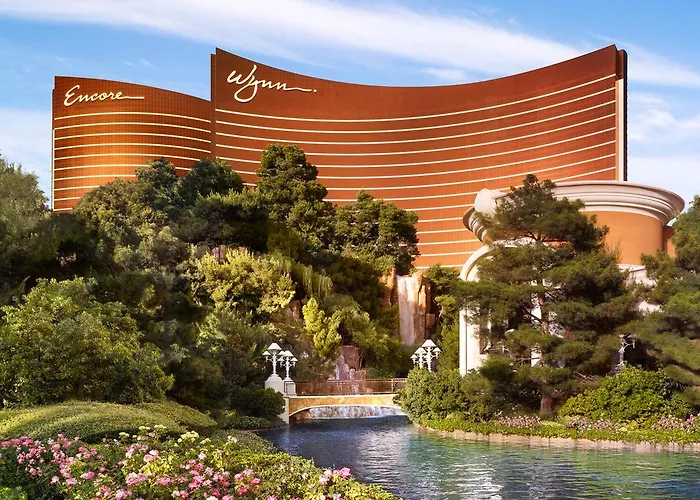
NOW. 2007 view of the same location as above (showing the building of Steve Wynn's Encore on the site of the old Desert Inn).

THEN. Early 70s view of the 1967 remodeled Frontier (first opened in 1942) and its roadsign. When first erected,the sign wasthe tallest freestanding sign in the world - beating the record formerly held by the 1958 Stardust and the 1965 Dunes' signs.

NOW. 2007 view of the approximate same location as above (showing the Frontier sign still standing). The Wynn Hotel is seen across the street (built on the land formerly occupied by the Colony Motel and assorted buildings). The Trump Tower's sales office was built next to the Frontier sign in 2004. The Wynn Encore is seen just beyond the Frontier sign.

THEN. In 1978, the Desert Inn remodeled its 1963 Room Tower and added the first mirrored glass ever seen on a Las Vegas hotel.The former ranch-house styling of the DI was changed to look more like a corporate office building. The old, sheet metal cactus signwas replaced by a mirrored glass sign. In 1997, the DI was remodeled again. It closed permanently in 2003.

NOW. The exact same location, as above, as seen in June 2007 shows the Frontier sign still standing and the Wynn Encore being built on the former site of the Desert Inn. The Las Vegas Strip

Early sixties view (circa 1963) looking north up the Strip from the current Venetian and Mirage - Treasure Island area. The unopened Landmark Tower is seen off in the distance (far right) and the Sahara Tower is seen at the far end of the Strip. The Wynn Hotel is now located at the first intersection beyond the Sands, where the red-roofed Colonial Motel is seen.

THEN Mid-1950s view of the Strip looking north. The 1952 Sands is seen at right, at the current location of the Venetian. The parked cars on the left sit just in front of where Treasure Island's entrance now is, with the pirate lagoon nowlocated beyond the last parked car and the billboard advertising the Golden Nugget. The lot behind that now holds Fashion Show Mall. The pylon roadsign of 1955 New Frontier can be seen further down on the left. The Wynn Las Vegas hotel now towers exactly across the street from that spot. The current Strip entrance to the Mirage is exactly across the road from the Sands' driveway.

NOW 2007 view from the same location as above. The Venetian replaced the Sands, 2 years after its 1996 demolition.

THEN The Sands Casino in 1962. The entrance and exit drive-way is the exact same now used at the Venetian. The Sands Casino was located where the current Venetian's gondolas now float.

NOW The same location (as seen above) showing the former Sand's site and same street intersection, as seen today. The original Sand's roadsign was located near the spot where the second Venetian column (at mid-left) now stands.
The 1952 Sands (left) and the 1965 Sands (right) with its new, 17 story, circular room-tower and
re-designed roadsign. The Sands' revised logo shortened the top of the letter 'S' and bent the 'D'.
The 1965 Sands' property - showing the original low-rise motel wings and the new high-rise hotel tower. Its room wings were named after popular racetracks. The Stardust, later, named its room wings after planets.
This current view shows the original Sands' driveway. The Sands roadsign was
near where the second column now stands. The casino sat between the columns, the Venetian sign and in veranda area, with wings extending towards the right.

The Rat Pack in front of the Sands' roadsign.

The original Sands.
The re-designed 1965 logo and entrance sign to the remodeled Sands Casino.
The Sands Copa Room, considered small by today's Las Vegas theater standards,
offered intimate performances with the top show-people of the 1950s-60s.

Sands by Night

Sands Pool
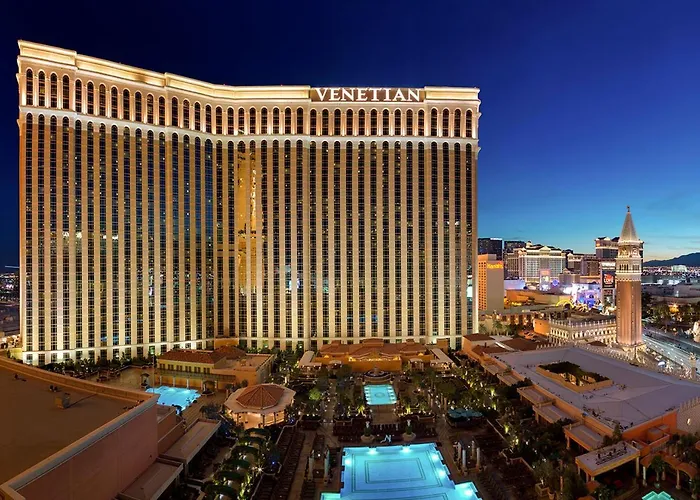
The Venetian property now occupies the former site of the Las Vegas, Sands' Hotel.

The Las Vegas Strip 1968.
The original 1958 Stardust.
Visit our Stardust Webpages

The re-modeled 1953 Flamingo.
The 1955, nine-story, Riviera was the first high-rise on the Las Vegas Strip.

1970 view of the 1964 Dunes high-rise, room tower.

1977 view of two world's tallest free-standing signs, The Frontier and Stardust.
1977 view of the Dunes' 1965 Tower. This location is now the Bellagio lake and fountains.
Gambler's Money
1977 northward view of the future Wynn Encore Hotel site - between the former Desert Inn, the Flame Restaurant and Gold Key Motel. The Riviera is father down on the right.

The Strip (looking north toward the Flamingo intersection) showing the Dunes and the MGM roadsigns circa 1976. The Bellagio is now located where the Dunes sign once stood and Ballys now owns the original MGM Grand. This photo was taken from the center of the Strip, near where the Paris Eiffel Tower is now standing.

Looking north, up the Strip, towards Downtown - from the 'Top of the Dunes' 1965. Now the Bellagio.
Flamingo's Champagne Tower is at bottom right, the 1965 Sands Tower at mid-right & Fremont Hotel top right.

Stardust advertising.

The Realm of the Coin.
Evette Carlson - 1959 Las Vegas Showgirl.
The 1950 Desert Inn at the current location of the Wynn Encore. Before & After - Around Las Vegas

Before & After. The same location showing the Dunes (in 1977) and the Bellagio (in 1998).
Las Vegas Beginnings - The Strip
Mid-50s water gambling in the Sands' pool.
The first table-mounted slot-machine was installed on the Strip in 1954.
The first electronic video slot-machine was introduced in 1966.
1965 view of the Strip, looking north towards Flamingo Road. The Eiffel Tower is now where the Galaxy Motel once was (on right). The Dunes (left) was located where the Bellagio lake is now. Caesars had just started construction. The Three Coins Motel (right, beyond Galaxy sign) became the location for the first MGM Grand (now Ballys). The Dome-of-the-Sea Restaurant, is at left, between Denny's and the Dunes entryway.
1964 view of the Strip and the Flamingo Hotel (looking north). The vacant land on lower left, with billboards
(then owned by Kirk Kerkorian) would later become the location for the 1966 Caesars Palace.
The Imperial Palace and Harrahs would later be built just north of the Flamingo Capri room wings.

1966 view of the Strip and the four corners of the Flamingo Road intersection. The Flamingo is seen just before its 1967 remodeling. Caesars Palace is seen the year after its 1966 opening.
The Dunes sign and parking lot are now the location of the Bellagio Lake and fountains. The vacant lot, on the right was the site of the Three Coins motel and later the 1973 MGM Grand. The Desert Villa Motel is seen on the northeast corner later becoming the Times Square Motel (in 1975) and the site of the 1978 Barbary Coast (now Bill's Casino). The parking lot, between the Dunes/Flamingo Road and Caesars, was purchased by young Steve Wynn, from Howard Hughes in the early seventies - and would give him his first good fortune in its sale to Caesars.
The construction of Caesars Palace 1966.
The beginning of the super-motel concept started at Stardust Casino Hotel - seen here after its 1965
re-modeling. The 1,000 room Stardust was the largest hotel in the world until the opening of
Kirk Kerkorian's 1,500 room International Hotel in July 1969.

Before Kirk Kerkorian built his International Hotel, he purchased the Flamingo and had it remodeled in 1967. The 1953 Champagne Tower was removed, the building was made flush with the road (instead of being set on its former diagonal) a covered driveway was included with a plexiglass backlit sign (which was redone in 1969 after being sold to the Hilton chain). A skyroom restaurant was built above the new porte cochere that looked out onto the new Caesars Palace fountains directly across the road. The plume shaped Flamingo roadsign was also added and the former (1953 reversed 'F') neon Flamingo sign was re-set in the parking area. During the 1980s and 90s, the Flamingo was extended into the parking area - going beyond the plume sign nearly to where the Flamingo Capri sign is seen (at far left). O'Shea's is now located close to where the Capri sign was located.
Stardust to Paradise
-
The Moon Landing Casinos
Kirk Kerkorian's International & Howard Hughes' Landmark.

As the decade of the sixties culminated with the moon landing, two new casinos were also in a
race to open their casinos by the time man reached the moon (on July 20). The Landmark
opened its doors first on July 1 and The International opened the next day - July 2, 1969.
The road to the Landmark & International, as seen from near the Stardust, in 1977. Convention Center Road and Riviera Road are among the Strip's shortest major side streets. Convention Center Road started at the Stardust and ended at the Convention Center on Paradise Road.

The flying saucer shaped Las Vegas Convention Center opened in April 1959. Convention Center
Road ran from Paradise Road to the Strip and ended at the Stardust Hotel.

In 1963, construction started on the Landmark Hotel, seen diagonally across from the Convention Center. The circular design of the Landmark mirrored the look of the Convention Center. Partly inspired by the Seattle Space-Needle, the Landmark sat 3/4 completed and empty until purchased by Howard Hughes in 1968. Meanwhile Kirk Kerkorian was building the International Hotel (Las Vegas' first 3 wing hotel) just next to the Convention Center (left). The race to open - had the Landmark opening on July 1st and the International Hotel opening (the day after) on July 2nd, 1969.

Las Vegas welcoming Howard Hughes. The Landmark was Howard Hughes' first casino opening.

1959 photo of space-age promotions at the Stardust.

In the late 1950s there were no stop-lights on the Strip. To slow vehicles down, citizens petitioned
for a stoplight to be placed somewhere on the Strip. The first stoplight on the Strip was chosen
(after heavy lobbying) to be placed directly in front of the 1958 Stardust, where the Strip
intersects with Convention Center Road.

View of the Landmark as seen from the Strip in 1966. The Thunderbird is seen in the foreground, soon after its 1965 remodeling, when the entire front was covered by the world's longest neon sign-facade.

The Landmark operated from 1969-1990. The Convention Center was demolished in
1990. The Landmark was imploded in 1995. The Stratosphere Tower would open in 1996,
becoming the new towering landmark for Las Vegas - influenced by the original Landmark .

Looking west at the Landmark, the Stardust, the Riviera and the La Madre mountains, in the distance (circa late 1970s). Red Rock Canyon and the beginnings of Summerlin can also be seen. The History of Kirk Kerkorian and the MGM Grand

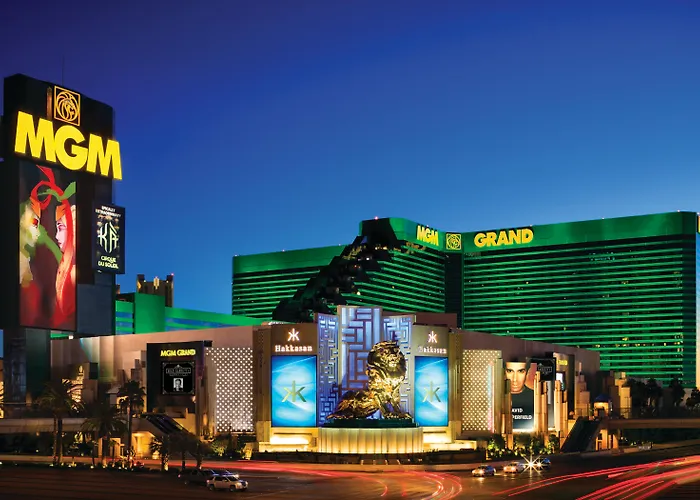
The 2,100 room MGM Grand Hotel, opened as the Strip's first super-resort in 1973. The MGM Grand set a new standard of size and luxury for early Las Vegas, unmatched for 16 years - until the 1989 opening of Steve Wynn's Mirage Hotel. The original MGM, then located at the south-east corner of Flamingo & the Strip, was sold to Bally's in 1986. The current, 5,005 room MGM Grand would open at the north-east corner of Tropicana & the Strip in December 1993 becoming the largest hotel in the United States and currently the second largest in the world.

MGM Grand's night driveway, in 1977.

The builder and operator of three consecutive 'world's largest hotels', Kirk Kerkorian holds the title as the longest reigning King of Las Vegas.

The MGM Grand Hotel, as seen thirty years ago, was a huge resort set on the still sleepy Las Vegas Strip. This hotel later became Ballys. A new room tower and the Paris Hotel now sits on the right. The easy-entry parking lot has since been converted to an elevated, plaza-like walkway with a spiraling lightshow.